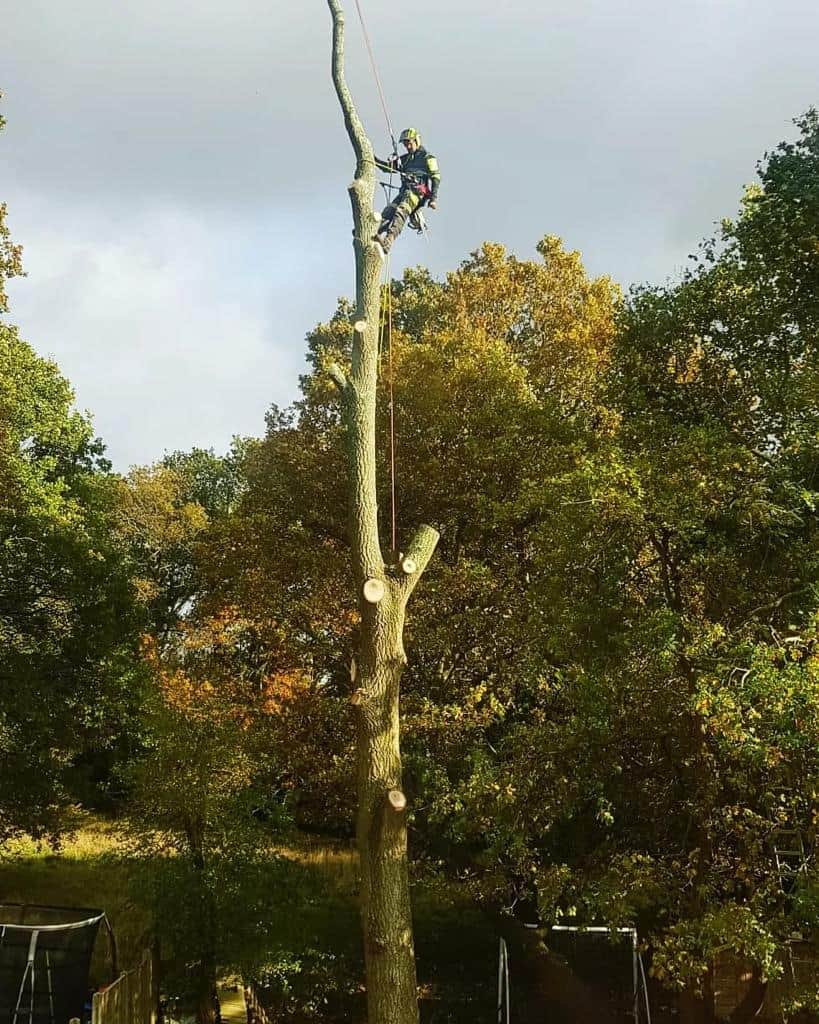
A mature tree can be an important feature of a garden, but its canopy may gradually become overcrowded as branches develop, cross and compete for space. This dense growth can restrict light, reduce airflow and place unnecessary strain on parts of the tree.
Selective pruning provides a measured way to improve the canopy without removing healthy growth indiscriminately. By targeting particular branches and retaining the tree’s natural shape, a tree surgeon can create a more balanced structure that supports the tree’s appearance, condition and long-term development.
For property owners in Loughton, Essex, professional pruning can also help trees sit more comfortably within their surroundings while preserving their established character.
How Does Selective Pruning Benefit a Crowded Tree?
Selective pruning involves assessing the entire canopy and removing only the branches that are causing a specific problem. The purpose is not simply to make the tree smaller. Instead, the work is planned around its species, age, structure and position.
Increasing Light Through the Canopy
When branches and foliage become excessively dense, very little light may reach the canopy’s interior or the garden below. This can leave internal growth weak and affect lawns, shrubs or planting beneath the tree.
Carefully removing selected secondary branches allows more natural light to pass through the crown. The improvement should be achieved gradually and evenly so that the canopy does not develop large gaps or lose its natural form.
Improving Air Circulation
A crowded canopy restricts the movement of air between branches. Selective pruning creates appropriate spacing, allowing air to circulate more freely through the crown.
Better airflow can help foliage dry more efficiently following wet weather. It also gives the canopy a lighter, more balanced appearance without leaving the tree looking severely cut back.
Removing Crossing and Rubbing Branches
Branches growing across one another may repeatedly rub as the tree moves in the wind. Over time, this friction can damage the bark and create wounds in the affected limbs.
A professional tree surgeon can identify which branch should be retained and which can be removed with the least impact on the tree. Dealing with crossing branches before significant damage occurs helps preserve a stronger canopy structure.
Reducing Competition Between Branches
Some trees develop several branches that compete for the same space. This can produce congested junctions, unbalanced growth or limbs extending in unsuitable directions.
Selective pruning helps guide future development by favouring well-positioned branches. Removing poorly placed or weaker growth gives retained branches more room and helps create a clearer framework within the crown.
Addressing Dead, Damaged or Weak Growth
Dead and damaged branches can remain hidden inside a dense canopy, particularly when viewed from ground level. These branches no longer contribute to healthy growth and may place nearby limbs under additional pressure.
Pruning provides an opportunity to remove defective material while inspecting the wider canopy. Weak attachments, split branches and declining sections can then be addressed as part of a considered approach rather than through unnecessary wholesale cutting.
Creating a More Balanced Shape
An overcrowded tree may look heavy on one side or develop clusters of dense growth in isolated areas. Selective pruning can redistribute visual weight across the canopy while respecting the tree’s natural growth habit.
The objective is not to force every tree into a uniform shape. Good pruning retains its individual character while correcting obvious imbalances and unsuitable growth.
Helping the Tree Fit Its Surroundings
As trees mature, their branches may begin to interfere with paths, driveways, buildings or other garden features. Selective pruning can provide suitable clearance while avoiding excessive canopy removal.
For gardens in Loughton, Essex, this can make an established tree more compatible with the available space. The work may improve access, increase usable garden space and prevent branches from repeatedly contacting nearby features.
Why Pruning Technique Matters
Every pruning cut affects the tree’s future growth. Poorly positioned cuts, excessive thinning or the removal of too much foliage can weaken the canopy and encourage clusters of rapid regrowth.
Professional pruning considers branch size, attachment points and the tree’s likely response. The work should remove enough growth to achieve a clear benefit while retaining sufficient healthy foliage to support the tree.
When Should a Crowded Canopy Be Assessed?
A professional assessment may be appropriate if:
- The canopy appears unusually dense or uneven
- Branches are crossing, rubbing or growing inwards
- Little light reaches the garden beneath the tree
- Dead or damaged branches are visible
- Limbs are obstructing access or contacting nearby features
- Previous pruning has produced excessive regrowth
These signs do not necessarily mean that extensive work is required. A targeted inspection can determine whether selective pruning would provide a suitable improvement.
Conclusion
Selective pruning can transform a crowded tree canopy by improving light penetration, airflow, branch spacing and overall balance. It also allows damaged, competing or badly positioned growth to be removed without unnecessarily reducing the healthy crown.
The best results come from understanding how the tree is structured and making carefully chosen cuts that support its future development. If a tree on your property in Loughton, Essex, has become dense or unbalanced, Loughton Tree Surgeons can assess its condition and recommend an appropriate pruning approach. Contact the team to arrange professional advice tailored to your tree and garden.
Call us on: 020 4572 0898
Click here to find out more about Loughton Tree Surgeons
Click here to complete our contact form and see how we can help with your tree care needs.