Understanding the Planning Behind Professional Tree Felling
Tree felling is far more involved than making a cut at the base and allowing the tree to fall. Every tree has a different structure, weight distribution and position within its surroundings. Its condition, access and proximity to nearby features all affect how the work should be carried out.
For property owners in Loughton, Essex, professional planning helps ensure that tree felling is completed in a controlled manner while limiting unnecessary disturbance to the surrounding garden.
The Tree Must Be Assessed Before Work Begins
A thorough assessment helps the tree surgeon understand how the tree is likely to behave during felling or dismantling. The visible shape of the crown does not always reveal weaknesses within the trunk, roots or major branches.
The assessment may consider:
- The tree’s species, height and trunk diameter
- The shape and balance of its crown
- Dead, damaged or weakened branches
- Cracks, cavities or areas of decay
- The condition of the root plate
- The tree’s natural or developing lean
- Nearby trees and vegetation
- The available working space
These details help determine whether the tree can be felled from the ground or requires a more controlled dismantling method.
Weight Distribution Affects the Direction of Movement
Trees rarely carry their weight evenly. One side of the crown may be heavier because of natural growth, past pruning, wind exposure or competition for light. Large lateral branches can also influence how the tree moves when cuts are made.
A leaning tree may not be suitable for straightforward felling in the apparent direction of the lean. Weak wood, unbalanced growth and restricted space can all require additional control.
Professional tree surgeons assess these forces before deciding where cuts should be placed and what equipment will be needed.
The Surrounding Area Must Be Considered
In many gardens, there is insufficient room for a whole tree to fall safely. Buildings, fences, sheds, paths, planting and neighbouring trees may all restrict the available space.
Planning involves identifying:
- A suitable working and exclusion area
- Potential obstructions around the tree
- Fragile garden features
- Safe routes for lowering and removing timber
- Ground conditions beneath the canopy
- Access for equipment and waste removal
- Areas requiring temporary protection
Understanding the wider site allows the work to be organised around its actual constraints.
Some Trees Need Sectional Dismantling
Where open felling is unsuitable, the tree may need to be removed in sections. This involves carefully reducing the crown and trunk rather than bringing the whole tree down at once.
Branches can be cut into manageable pieces and, where necessary, lowered with ropes. The remaining stem is then reduced progressively.
Sectional dismantling is often appropriate when a tree stands close to structures, occupies a confined garden or has an unpredictable condition. It allows each part of the tree to be controlled individually.
Damaged Trees Require Additional Caution
Decay, storm damage and structural weakness can make a tree less predictable. A damaged branch may fail when disturbed, while a decayed trunk may not respond to cuts in the same way as sound wood.
A weakened tree may also be unsuitable for normal climbing methods. The plan must account for the stability of the trunk and major branches before weight is placed upon them.
Specialist access equipment or alternative working methods may be required where the tree cannot safely support an operative.
Weather Conditions Influence the Work
Wind, rain and ground conditions can affect tree felling. Strong winds may move the crown and alter loading on branches, while wet or soft ground can reduce stability for workers and machinery.
Weather conditions are particularly important when handling tall trees, large limbs or suspended sections. A professional team will consider whether the conditions allow the planned method to be carried out with sufficient control.
Postponing work when conditions are unsuitable is part of responsible planning.
Access Must Be Planned in Advance
The route from the tree to the work vehicle or processing area can affect the entire operation. Narrow gates, steps, slopes and restricted side passages may limit the size of equipment that can reach the tree.
Planning access helps determine:
- Which machinery is suitable
- How branches and trunk sections will be removed
- Where equipment can be positioned
- Whether timber needs to be cut into smaller pieces
- How the surrounding ground will be protected
- Where processed material can be placed temporarily
Without this preparation, the removal stage may cause unnecessary delays or garden disturbance.
Rigging Helps Control Heavy Sections
Large branches and trunk sections can be extremely heavy. Where they cannot be allowed to fall freely, rigging equipment may be used to lower them in a controlled way.
The tree surgeon must identify suitable attachment points and consider the forces created during lowering. The size and shape of each section are planned so that the equipment and ground team can manage it effectively.
Rigging is a skilled part of tree work and requires clear communication between the climber and the team below.
Timber and Branches Need an Organised Removal Plan
Felling a tree creates a considerable volume of material. Branches, foliage and trunk sections need to be processed and moved without obstructing the working area.
A planned sequence keeps escape routes and access points clear. It also prevents cut material from accumulating where it could interfere with later stages of the work.
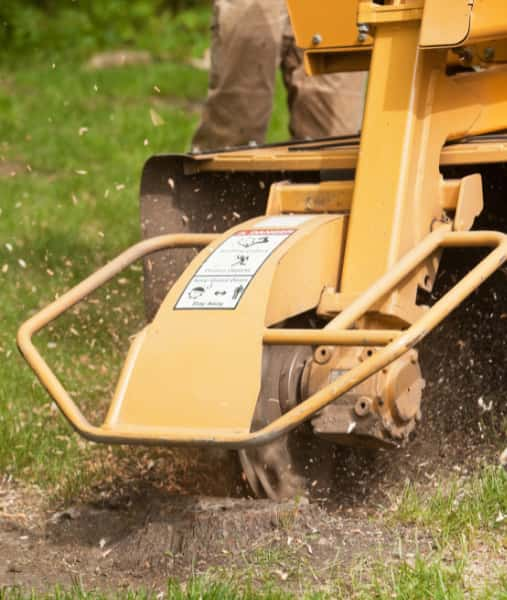
The final handling of the stump should also be considered. If future landscaping is planned, stump grinding may be recommended as a separate stage after felling.
Clear Communication Supports Controlled Work
Professional tree felling depends on coordination. Every team member needs to understand the sequence of work, their position and how sections will move.
Before cutting begins, the team can confirm:
- Individual responsibilities
- Communication signals
- Equipment positioning
- The order of cuts
- Exclusion areas
- Routes for moving timber
- What to do if conditions change
This shared understanding helps the operation proceed efficiently and allows the plan to be adjusted when unexpected conditions are uncovered.
Conclusion
Tree felling requires careful planning because each tree and site presents different challenges. Tree condition, weight distribution, nearby features, access, weather and the method of removal must all be assessed before work starts.
If a tree on your property in Loughton needs to be felled, Loughton Tree Surgeons can assess the site and determine an appropriate removal method. Careful preparation and professional tree surgery help ensure that the work is carried out with control and consideration for the surrounding area.
Call us on: 020 4572 0898
Click here to find out more about Loughton Tree Surgeons
Click here to complete our contact form and see how we can help with your tree care needs.